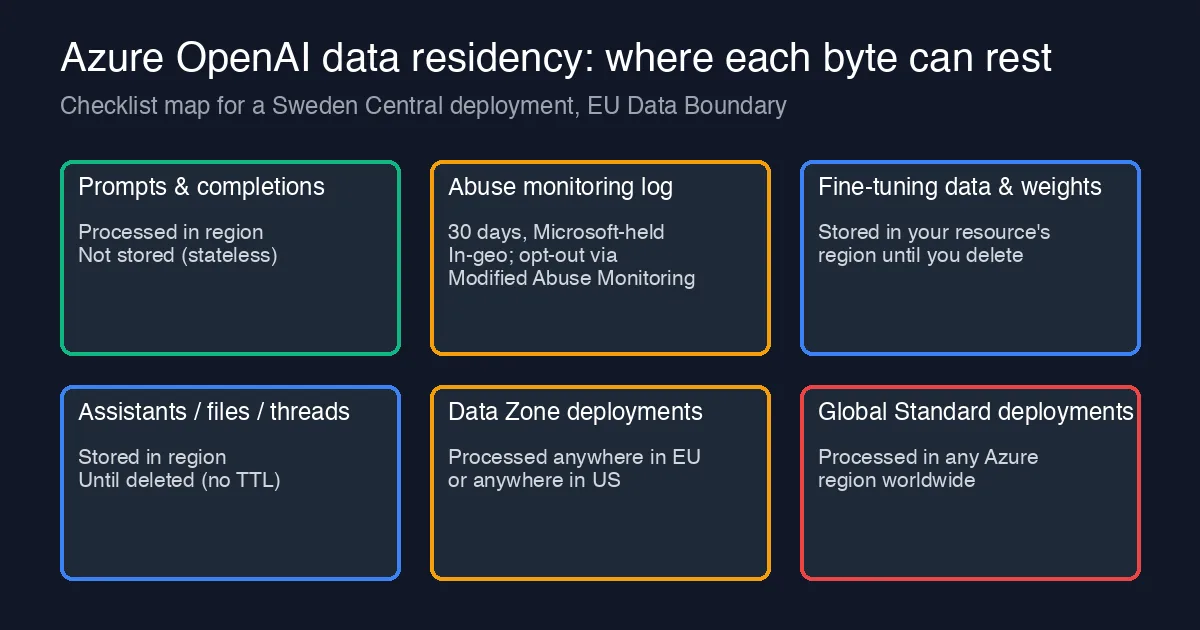
Enterprise AI: Data Residency and Compliance Checklist for Azure OpenAI Deployments
A 12-point data residency and compliance checklist for Azure OpenAI: deployment types, abuse monitoring, stored data, CMK, logging, DPIA and a CI test.
A 12-point data residency and compliance checklist for Azure OpenAI: deployment types, abuse monitoring, stored data, CMK, logging, DPIA and a CI test.
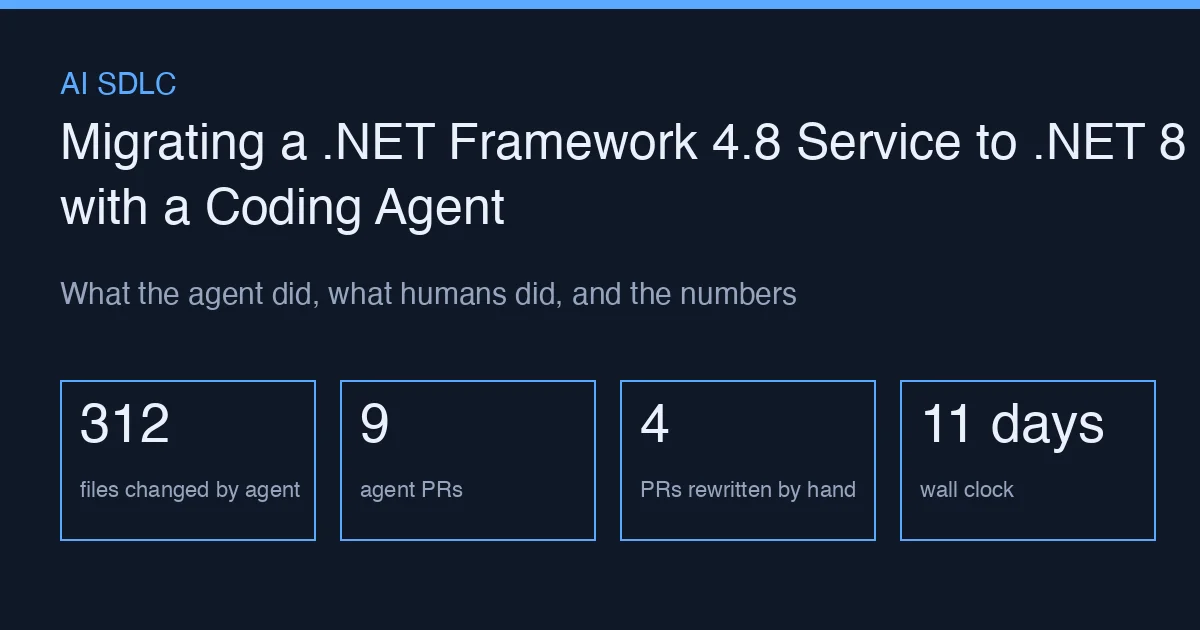
Splitting a .NET Framework 4.8 to .NET 8 migration between a coding agent and two engineers: the plan, the gates, two closed agent PRs, 11 days vs 7-9 weeks.
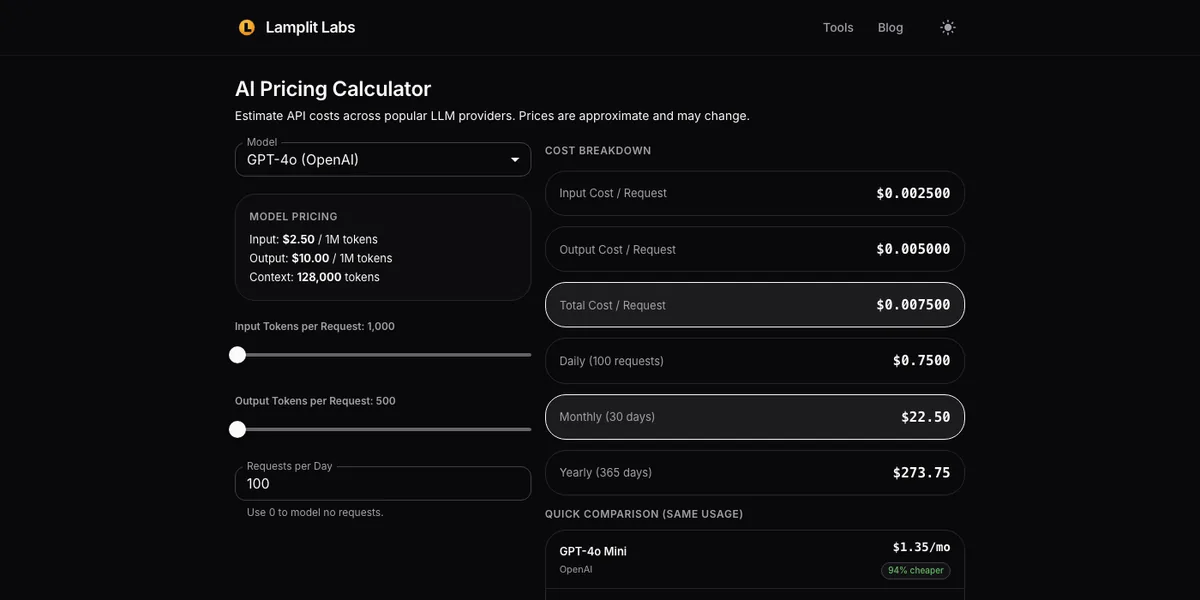
How the Lamplit Labs AI Pricing Calculator turns tokens per request and daily volume into a monthly LLM bill and compares models before you commit.
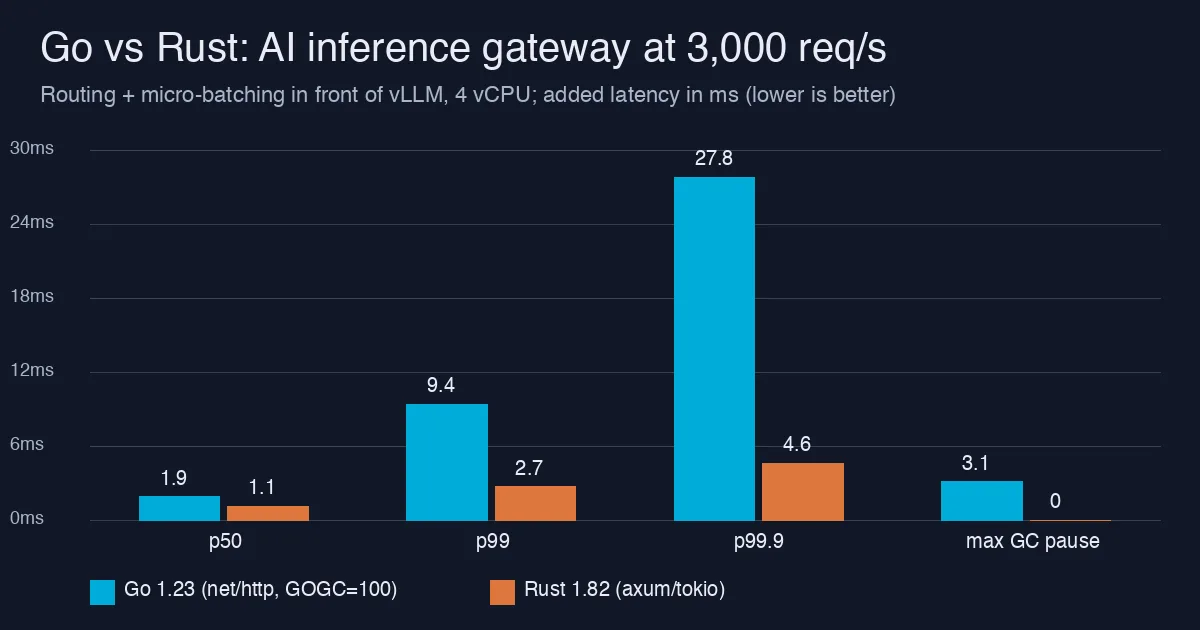
Same routing + micro-batching gateway in Go and Rust, 3,000 req/s on 4 vCPU. Added p99: Go 9.4 ms, Rust 2.7 ms; RSS 148 MB vs 34 MB; where Go still wins.
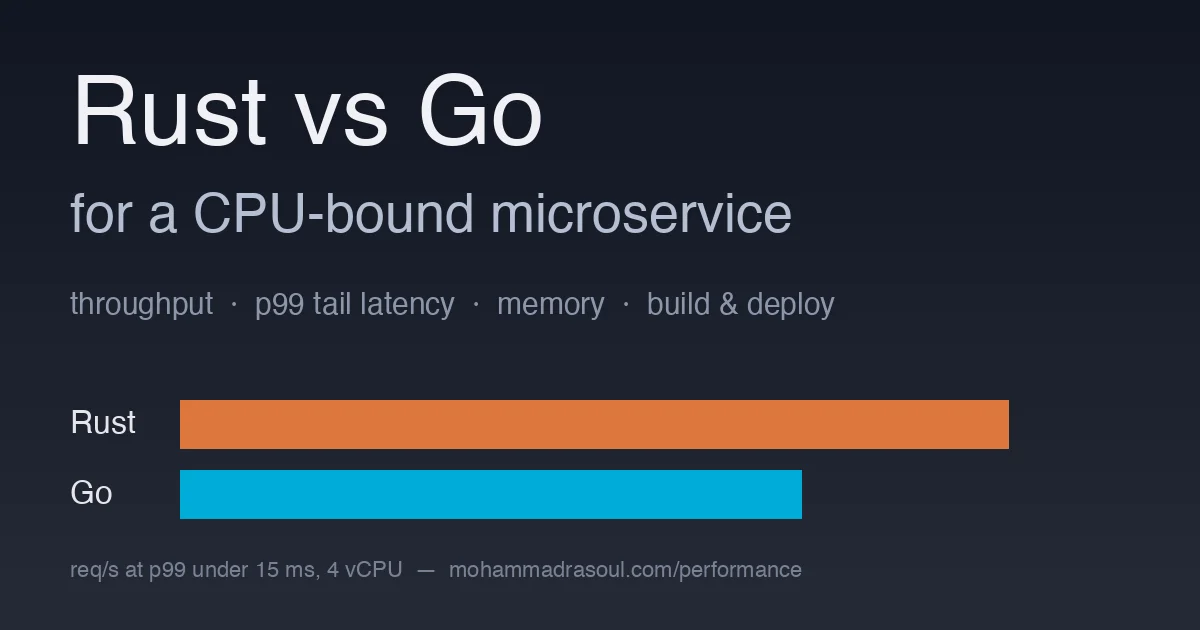
Same CPU-bound pHash scorer in Rust (axum) and Go (net/http) on 4 vCPU. Rust: 9,840 req/s, p99 6.8 ms, 38 MB RSS. Go: 7,410 req/s, p99 12.7 ms, 112 MB.
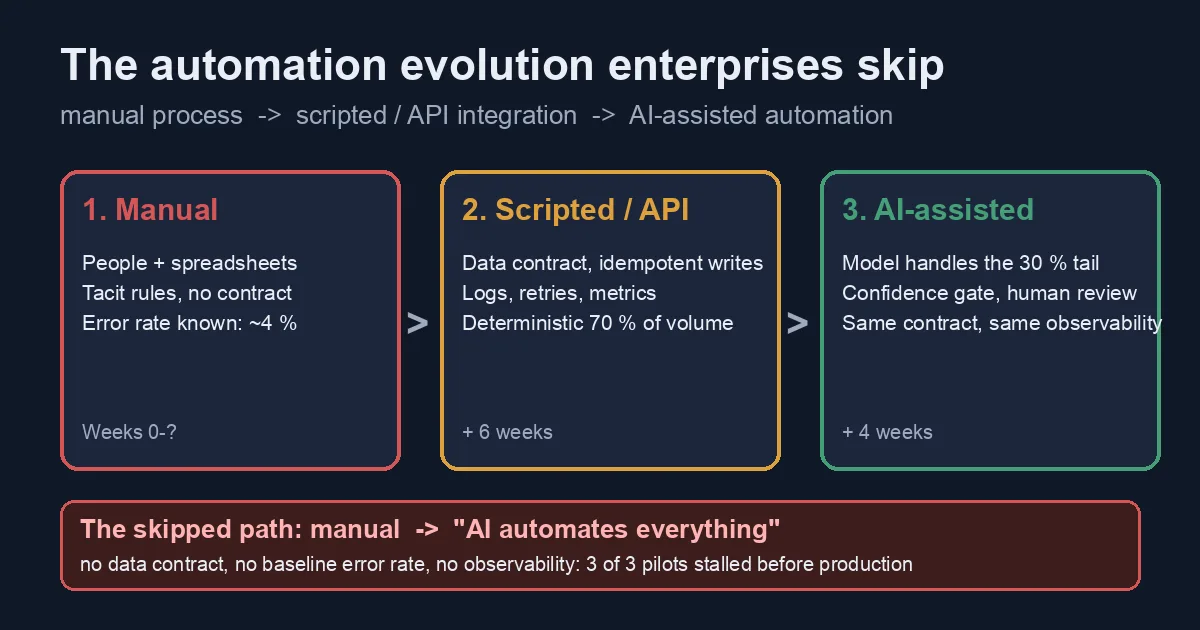
Why AI-automates-everything pilots stall: they skip the scripted/API stage that fixes the data contract, baseline error rate and logging. 3 worked examples.
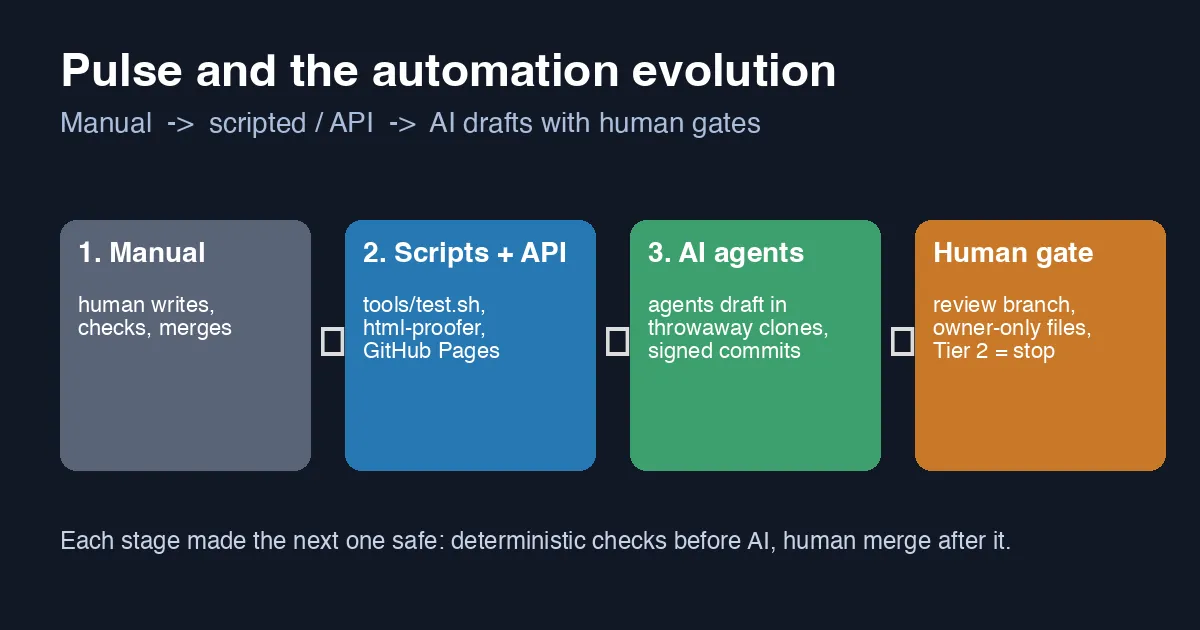
How Pulse fits the manual to API to AI progression: what it automates for this blog today, where humans still approve, and how to pace AI adoption.
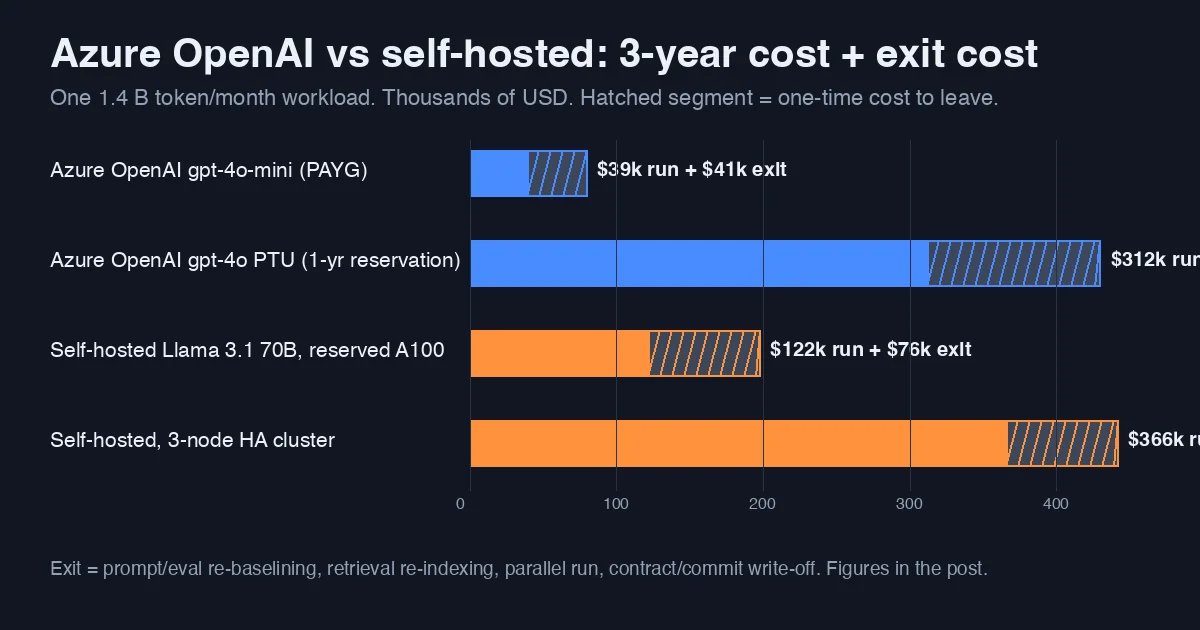
What it actually costs to leave: a lock-in audit and a priced exit plan for one 1.4 B token a month workload on Azure OpenAI vs self-hosted Llama 3.1 70B.
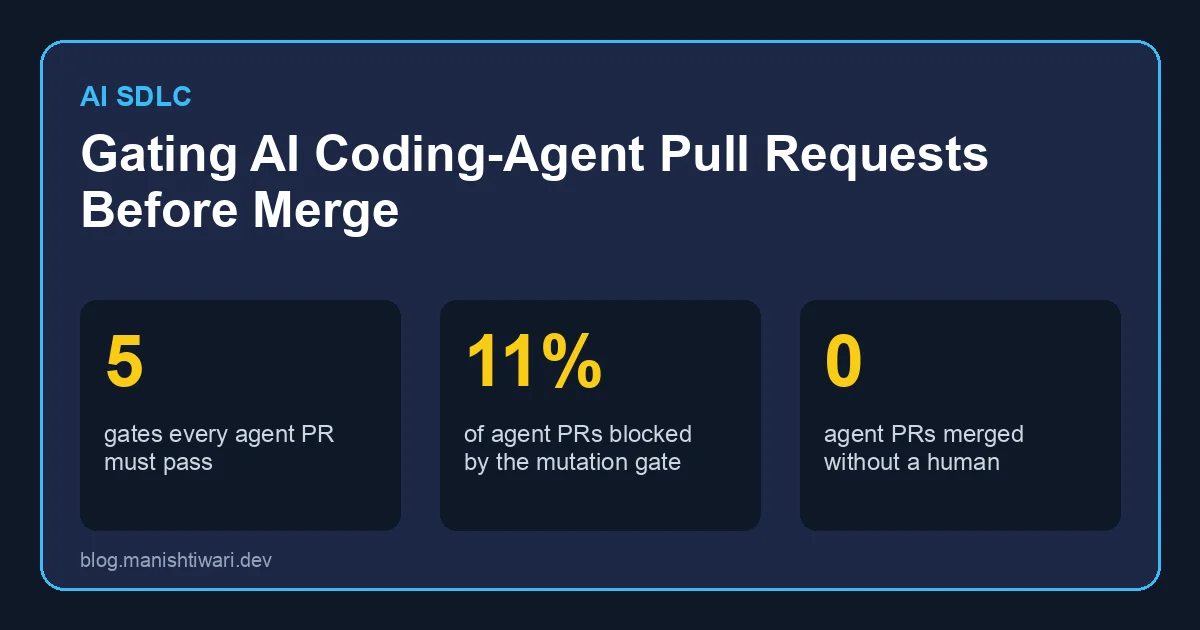
The five merge gates we run on every AI coding-agent pull request for .NET services: provenance, scope diff, sandboxed tests, mutation score and human review.
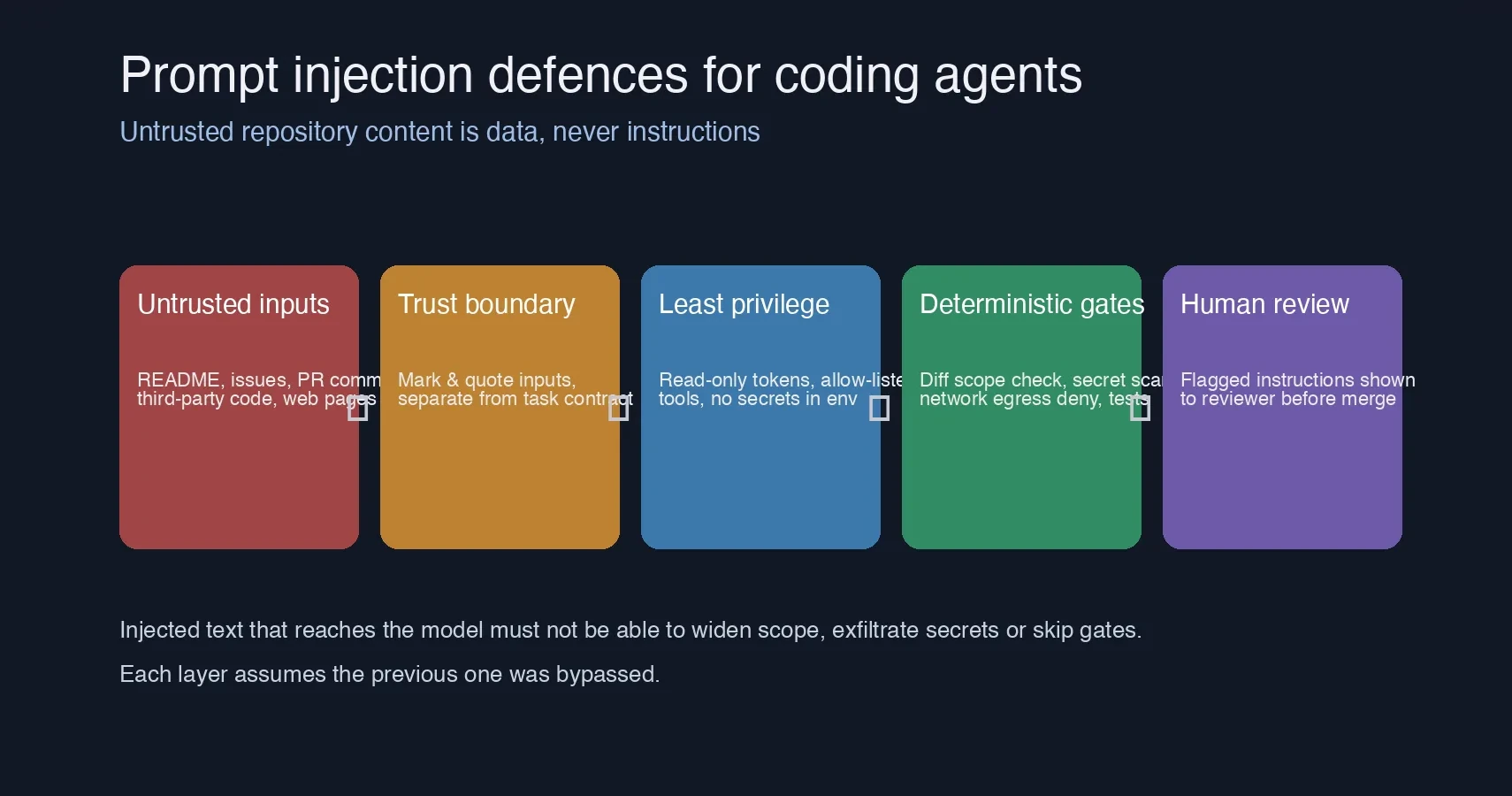
How a coding agent gets hijacked by text in a README or PR comment, and the five layers that stop injected instructions from widening scope or leaking secrets.