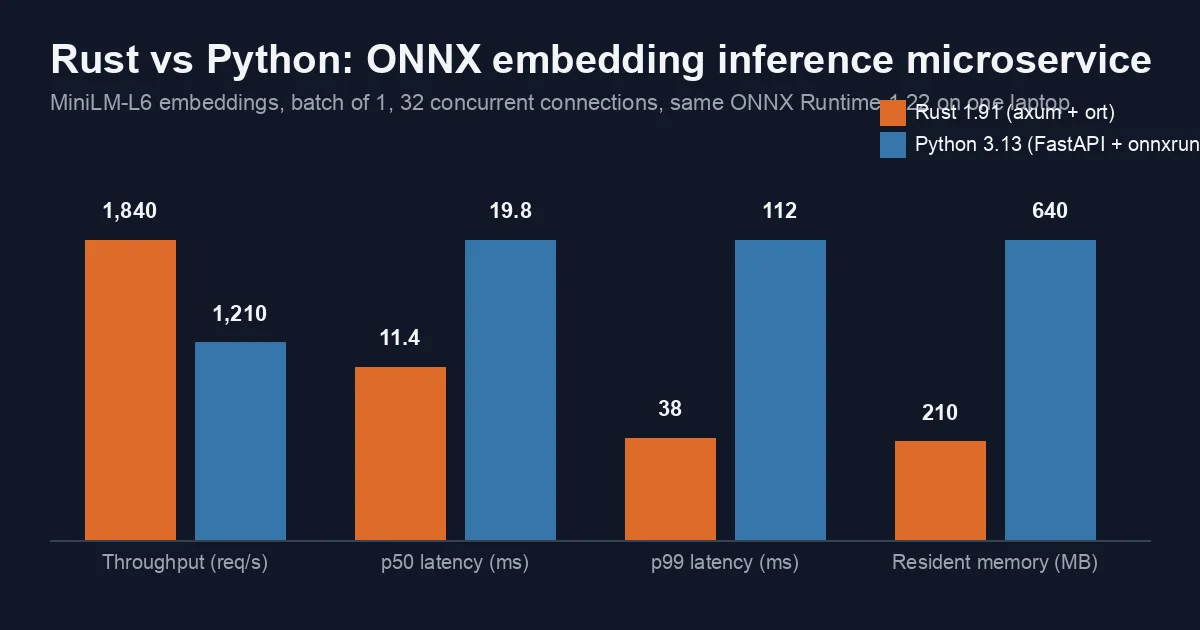
Rust vs Python for an AI Inference Microservice: 1.5x Throughput, 3x Less Memory, 3x Better p99
Rust 1.91 (axum + ort) vs Python 3.13 (FastAPI + onnxruntime) serving the same MiniLM embedding endpoint: req/s, p50/p99, memory and cold start measured.
Rust 1.91 (axum + ort) vs Python 3.13 (FastAPI + onnxruntime) serving the same MiniLM embedding endpoint: req/s, p50/p99, memory and cold start measured.
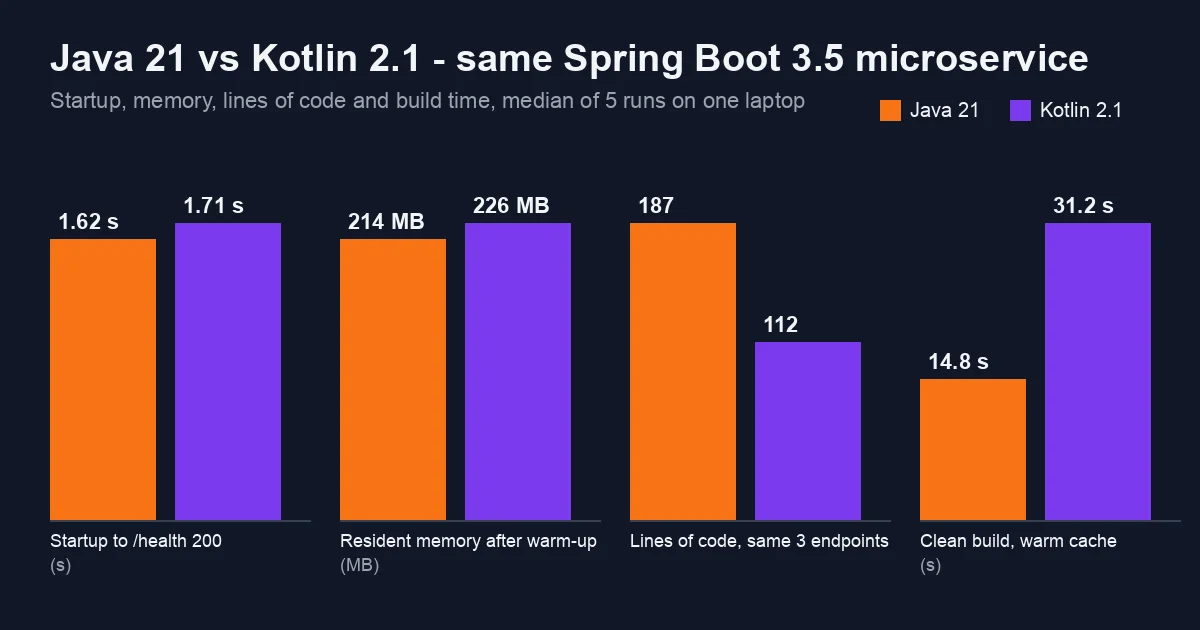
Java 21 vs Kotlin 2.1 on the same Spring Boot 3.5 microservice: startup time, memory footprint, lines of code and build time measured on one machine.
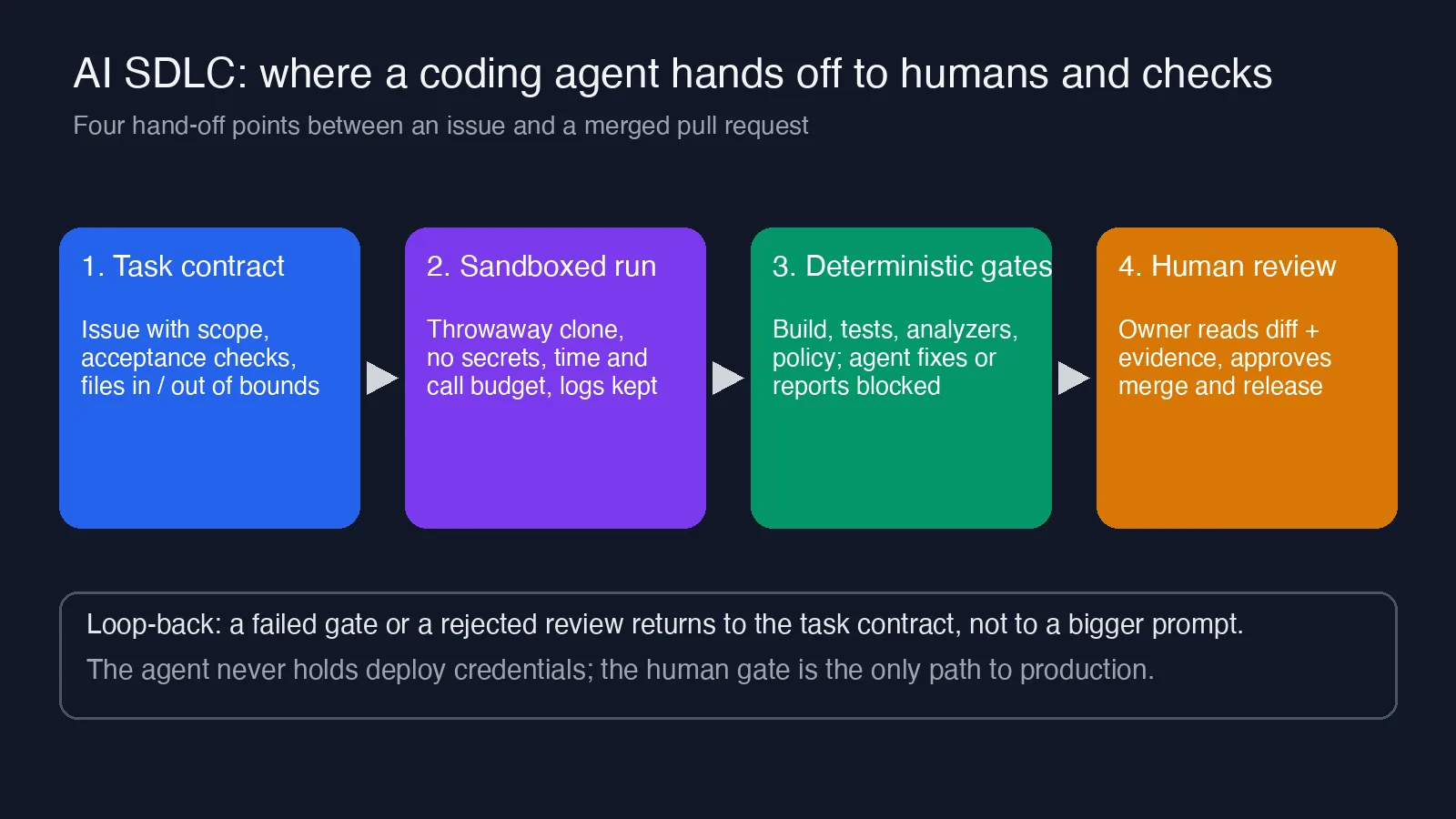
A practical model for putting AI coding agents into a .NET delivery pipeline: task contract, sandboxed run, deterministic gates and a human review gate.
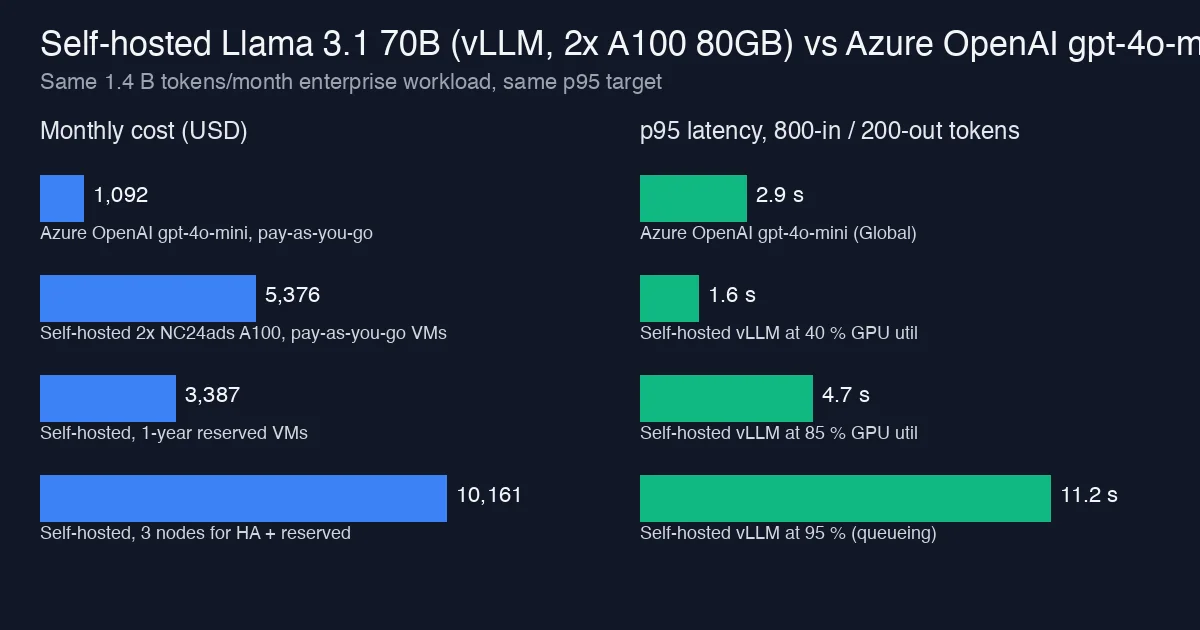
A 1.4 B token a month enterprise workload priced as Azure OpenAI gpt-4o-mini and as self-hosted Llama 3.1 70B on vLLM: cost, p95 per GPU load, break-even.
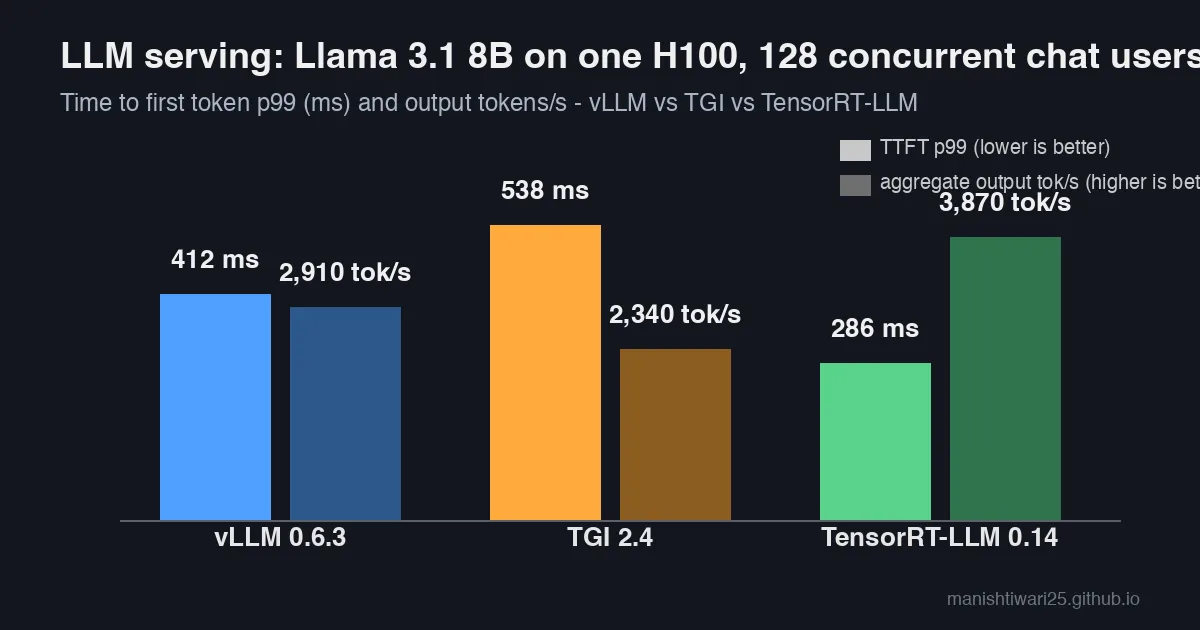
Same Llama 3.1 8B, same H100, 128 concurrent chat users. TTFT p99: TensorRT-LLM 286 ms, vLLM 412 ms, TGI 538 ms; throughput and setup cost decide it.
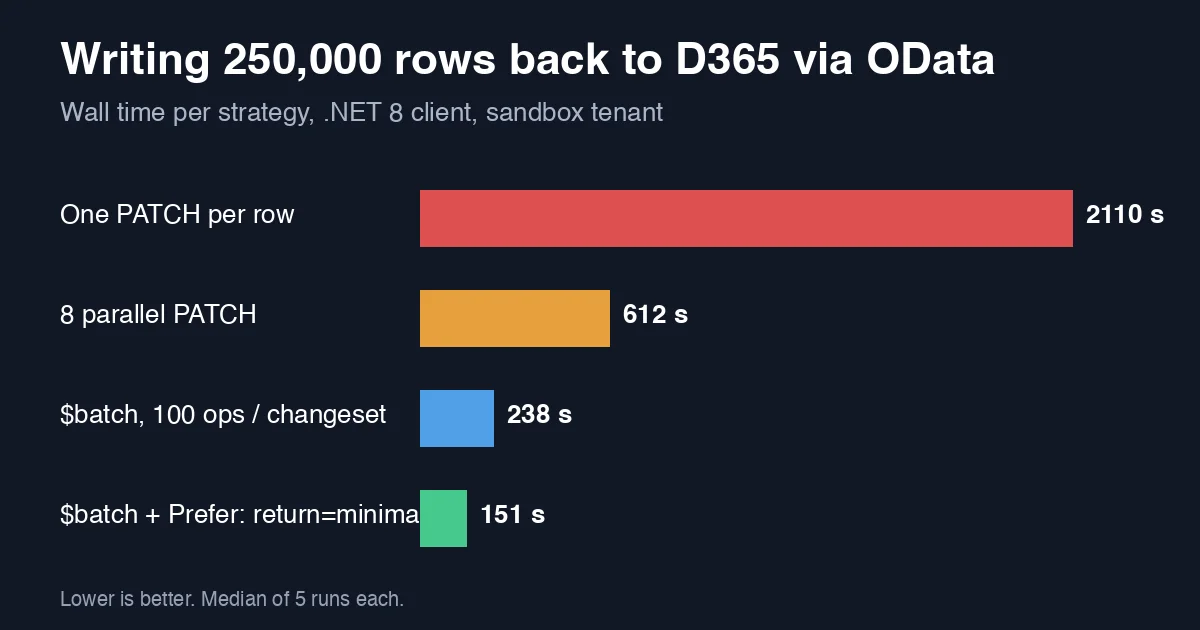
Measured wall time for four ways to write 250,000 rows into Dynamics 365 over OData from .NET: per-row PATCH, parallel workers, $batch and return=minimal.
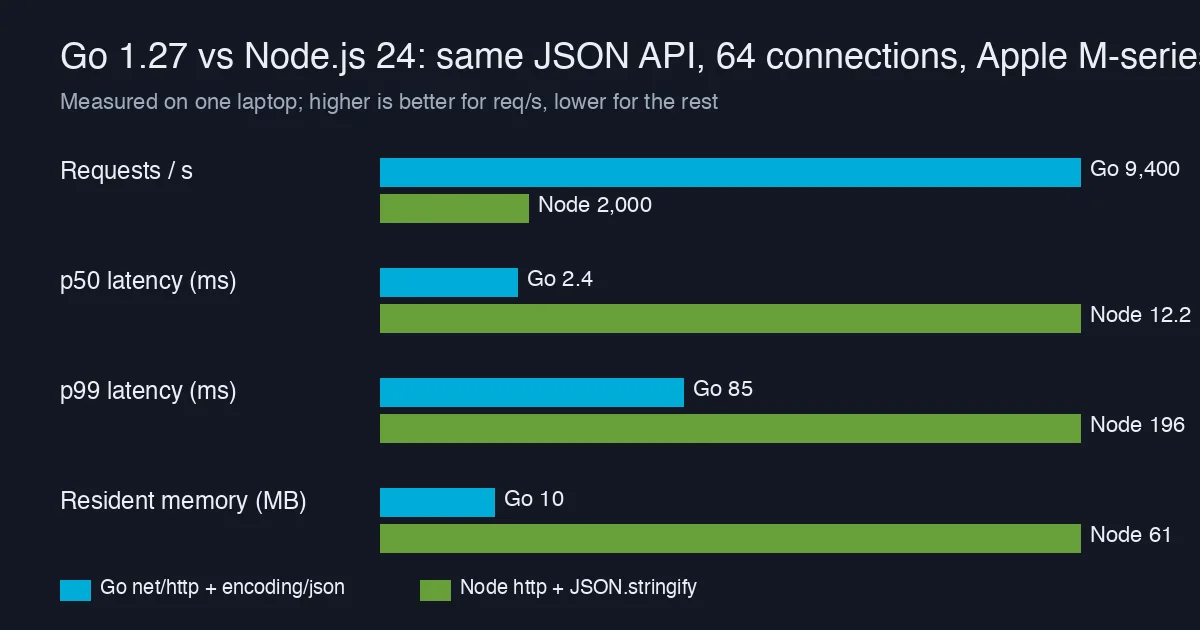
Go 1.27 vs Node.js 24 serving the same 50-item JSON endpoint under 64 connections: req/s, p50/p99 latency, resident memory and build step measured on a laptop.
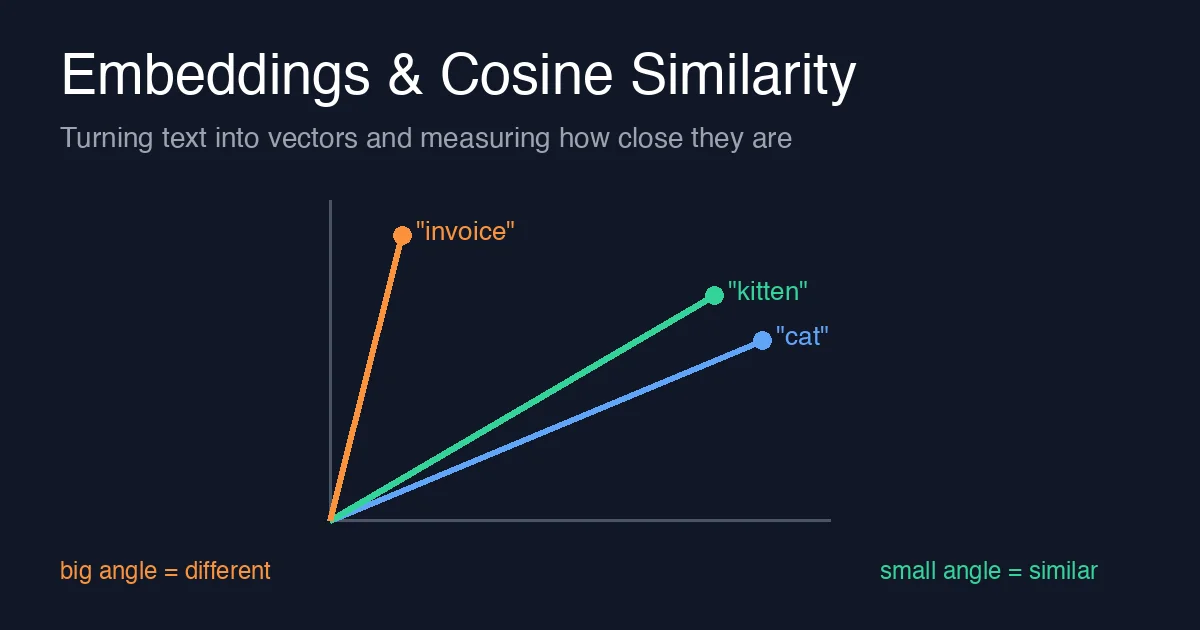
Beginner tutorial: call an embeddings API, turn two sentences into vectors, and compute cosine similarity by hand with a tiny numeric example you can run.
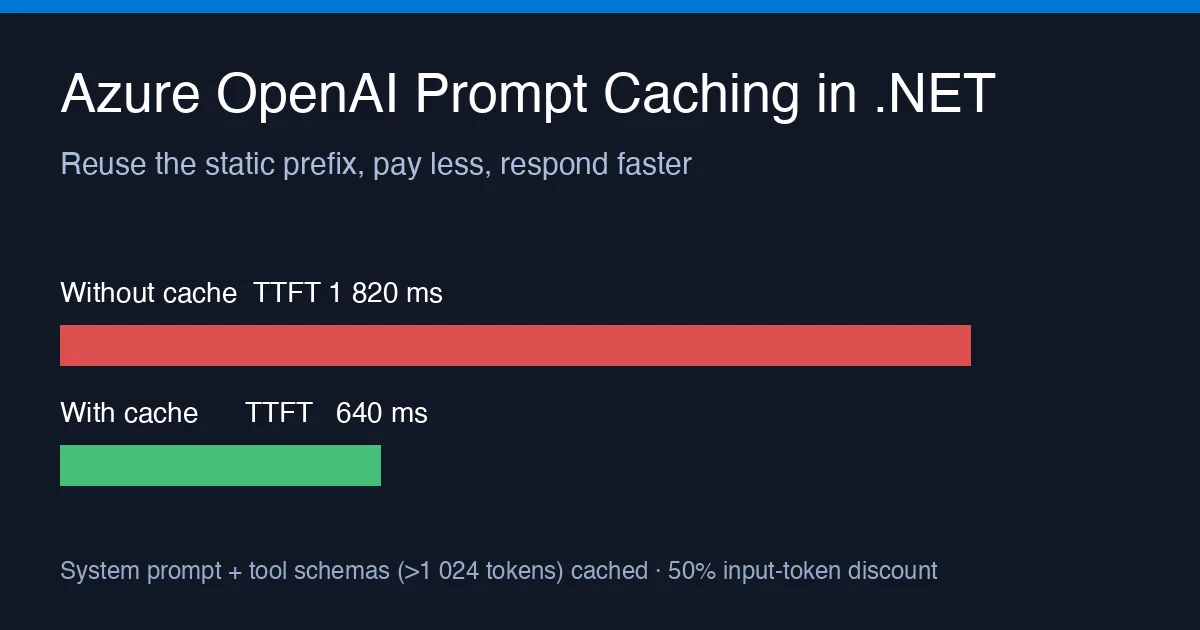
How Azure OpenAI prompt caching works, how to structure prompts so the static prefix hits the cache, and measured latency and cost savings from .NET.
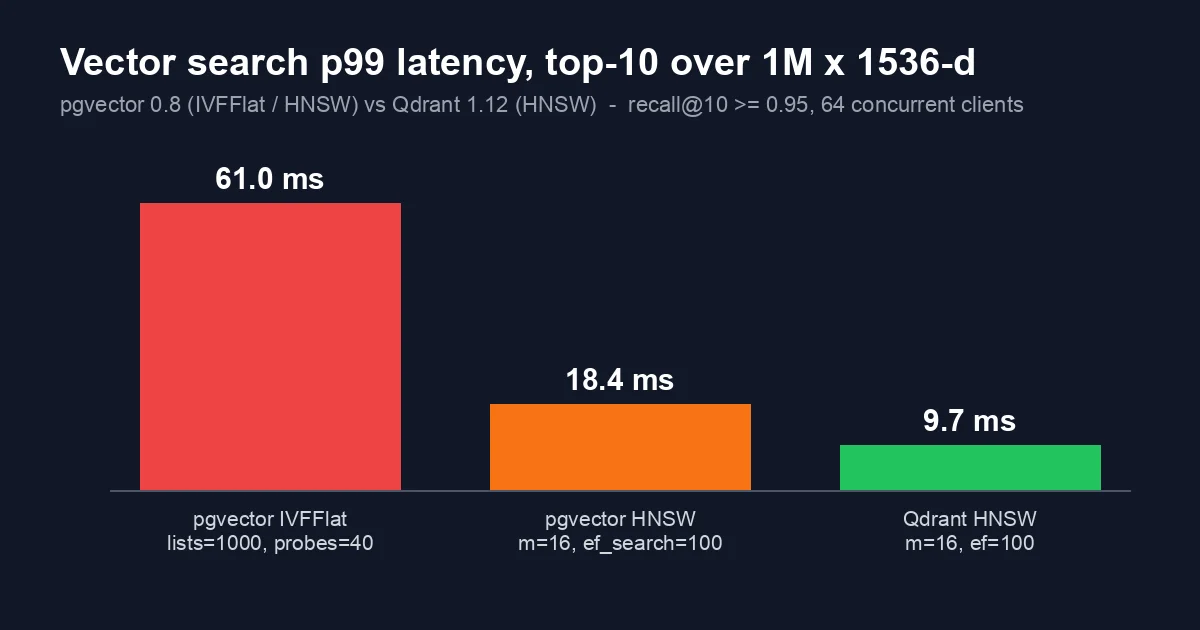
Same 1M OpenAI embeddings, same recall floor. pgvector IVFFlat p99 61 ms, pgvector HNSW 18.4 ms, Qdrant 9.7 ms; the filter case decides it.